
Introduction
Over the last couple years, I’ve written several articles on miracles, including preaching lessons on the same subject. In regard to modern miracles, I’ve hammered home that they don’t exist today by sharing this proof:
In April, 2020 (at the beginning of the COVID pandemic) a news report stated that all healing services were cancelled because of the pandemic. If modern healings were real, why weren’t these people on the front lines as First Responders to heal everyone? Hundreds of lives could have been saved if these so-called faith healers went and healed everyone. The latest response, to this that I heard was, “God expects us to use common sense.”
Definition of Common Sense
Turning to Dictionary.com, the definition is as follows—sound practical judgment that is independent of specialized knowledge, training, or the like; normal native intelligence.
The response was shared by our located preacher who traveled back to home for the holidays. He spoke with a couple who assembled with the Church of God (a miracles-based group) and asked them why the healers weren’t out there during the pandemic. Their response, as listed above, is that God wants us to use common sense and not put ourselves in any kind of danger.
With that in mind, let’s look at an example from scripture and see whether common sense was used. And if not, why not?
The First Preaching Tour
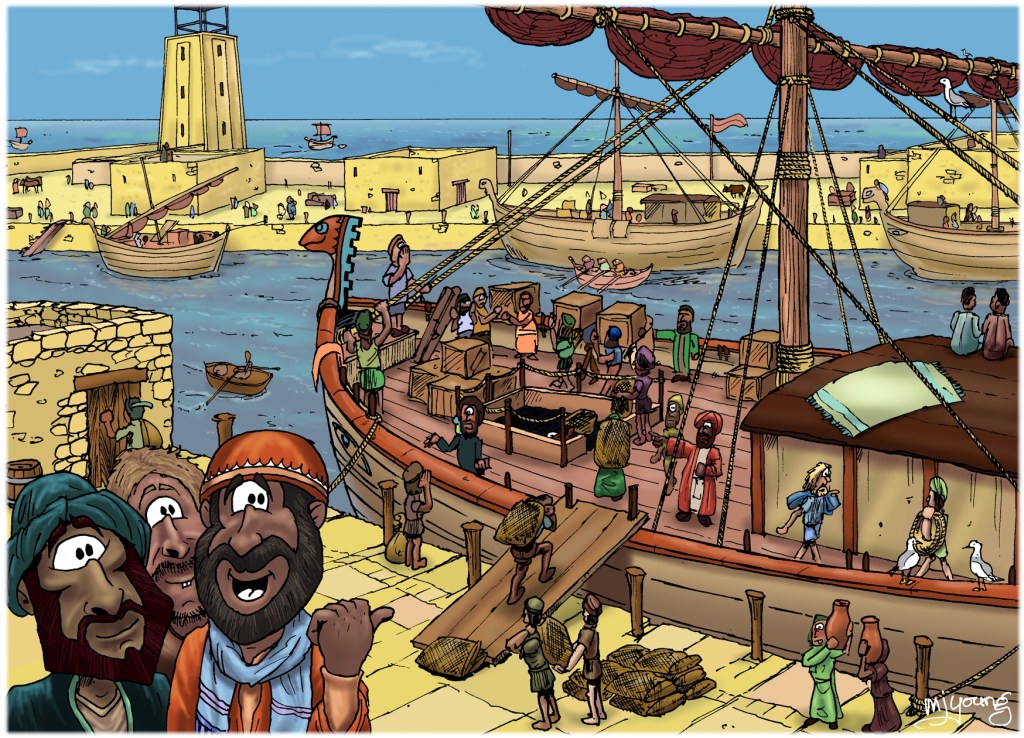
In Acts 13, the first of three preaching tours began where Paul and Barnabus traveled to various cities to preach the gospel and establish congregations there.
As chapter 14 begins, they were preaching in Iconium and many people believed. Some unbelieving Jews stirred up the gentiles against them and, ultimately threaten to stone them (vs. 5). Paul and Barnabus fled to Lystra and Derbe where they continued their preaching (vs. 6).
After healing a man (vs. 8-10), they were herald as gods and sacrifices were to be made in their honor (vs. 11-13). Paul and Barnabus rejected their idea and preached against it (vs. 15-17). It had little to no effect on the crowd and Paul was stoned and dragged out of the city; left for dead. (vs. 18-19)
Common sense would dictate that Paul would have gotten up and left, not only the area, but also the entire tour itself, returning to Jerusalem and calling it quits. But he didn’t! He got up and went back into the city (vs. 20). Not only that, but they went to another city and then returned here (vs. 21).
How Far?
Had the apostles used common sense when making decisions about where they would preach the gospel or who they would encounter, it wouldn’t have gone as far as it actually did.
Jesus said, And He said to them, “Go into all the world and preach the gospel to every creature.” (Mark 16:15) This was commanded by The Lord, Himself, of which the apostles did just that.
Paul relates this to the church in Colossae, which has come to you, as it has also in all the world, and is bringing forth fruit, as it is also among you since the day you heard and knew the grace of God in truth (Colossians 1:6).
Furthermore, here’s a “laundry list” of things Paul endured while touring the Roman Empire, From the Jews five times I received forty stripes minus one. Three times I was beaten with rods; once I was stoned; three times I was shipwrecked; a night and a day I have been in the deep; in journeys often, in perils of waters, in perils of robbers, in perils of my own countrymen, in perils of the Gentiles, in perils in the city, in perils in the wilderness, in perils in the sea, in perils among false brethren; in weariness and toil, in sleeplessness often, in hunger and thirst, in fastings often, in cold and nakedness– besides the other things, what comes upon me daily: my deep concern for all the churches. (2 Corinthians 11:24-28)
Had Paul listened to common sense, he would never have suffered any of this for the sake of the gospel. But he did because he was committed to the cause just as we should be.
Conclusion
Common sense would tell us not to intentionally look for trouble (or hope that we become involved in it) but we should press forward in sharing the gospel with family, friends, and loved ones.
As the apostle Peter wrote, Yet if anyone suffers as a Christian, let him not be ashamed, but let him glorify God in this matter. (1 Peter 4:16) Sometimes, we need to ignore common sense to further the gospel and to enlarge the borders of God’s Kingdom.
Finally, as Paul wrote to the church in Corinth, the miracles have ceased (1 Cor. 13:8-10). This is what common sense teaches us: There are no miracles today and that’s why they stayed away during the pandemic.
 The Christian Caravan
Leave a comment