
Introduction
Next Thursday we celebrate the holiday of Thanksgiving here in America. A time for family and friends to gather together and eat a hearty meal. Most people may not even know the significance of it as, to them, it’s just another day off from work or school and it’s the holiday which leads to Christmas.
But suppose you no longer had that opportunity? What if it was taken from you by an outside force? Suppose 70 years would pass before you would be allowed to celebrate it again? The Jews in the Old Testament knew something about this.
The Center of Life
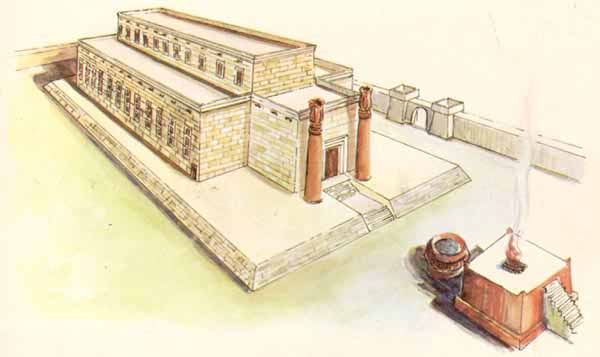
When Solomon built the temple (1Kg. 6) designed by God, it became the center of existence for the Jews. This was where God “resided” and where they came on a daily basis to worship Him and the give their offerings and sacrifices. Before this was the tabernacle which was created to be a sort of traveling temple as the Jews wandered in the wilderness.
When the temple was completed it gave the Jews a sense of belonging since being brought up out of bondage in the land of Egypt and into the promised land. The temple signified that they could put down roots and would no longer have to wander from place to place.
The Past stayed with Them
As the years passed, the attitude of the Jews towards worshipping God, and the temple itself, had changed. The mannerisms of idolatry which they had learned in Egypt had stayed with them and gradually began to surface so that not only was The Father worshipped in the temple but the gods of other nations as well.
Prophets were sent by God to warn their people to repent and return to Him else they would be wiped out or sent into captivity. He even threatened to destroy the temple, His own house, if they wouldn’t come back to him. The Northern ten tribes were carried away in captivity and yet those in Judah ignored these signs.

The City has been Captured!
Both Jeremiah and Ezekiel, prophets of God, made a plea with the people; Jeremiah in Jerusalem and Ezekiel in Babylon, to repent and return to the Lord. Twice already the Chaldeans had attacked and carried away people to Babylon. A third attack was imminent in which not only would the remaining citizens be carried away, but also the city of Jerusalem; including the temple would be destroyed.
Not many believed them and yet in the 12th year of captivity, an individual managed to escape Jerusalem during the attack and travel all the way to Babylon, by the River Kebar, and deliver the fateful message to Ezekiel, “And it came to pass in the twelfth year of our captivity, in the tenth month, on the fifth day of the month, that one who had escaped from Jerusalem came to me and said, ‘The city has been captured!’” (Ezek. 33:21)
Rebuilding the Temple
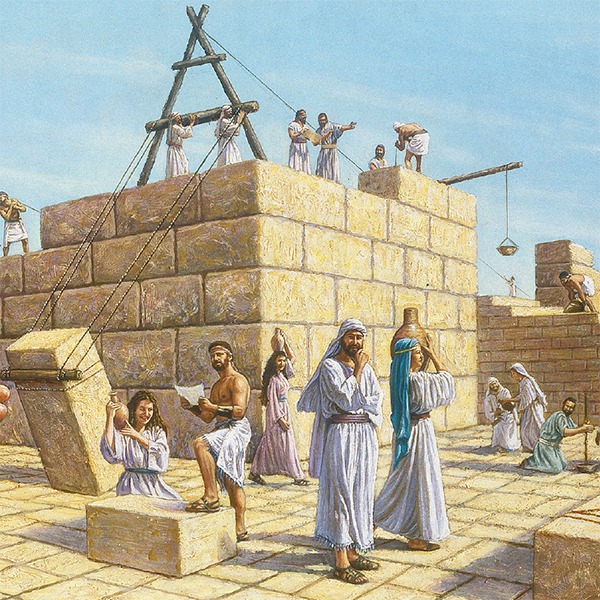
70 years had past just as the prophets foretold and the people were allowed to return to their land and begin to rebuild. When the foundation was laid there were mixed feelings about this as stated in Ezra 3:11-12, “And they sang responsively, praising and giving thanks to the LORD: “For He is good, For His mercy endures forever toward Israel.” Then all the people shouted with a great shout, when they praised the LORD, because the foundation of the house of the LORD was laid. But many of the priests and Levites and heads of the fathers’ houses, old men who had seen the first temple, wept with a loud voice when the foundation of this temple was laid before their eyes. Yet many shouted aloud for joy.”
For the older members it was a bittersweet event having seen the original temple in its glory, and perhaps, witnessing its destruction. Those might have been as young as 10 years old now returning as 80. They knew what the city and the temple represented to them.
The Thanksgiving Choirs
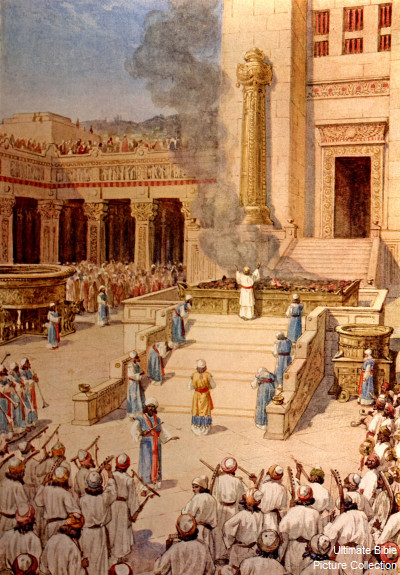
Although the temple wouldn’t be as majestic as the first, it would be more holy and reverent towards God. Upon completion of the temple, and the building of the city walls, the book of the Law was found and read before the people. In Nehemiah 8, the crowd stood up when the book was opened and as the Law was read (vs. 5), they praised God (vs. 6), and most had wept during its reading (vs. 9-10) because it had been so long since they heard those sacred words.
Following this, both Nehemiah and Ezra formed two large Thanksgiving choirs who marched along the walls, in opposite directions, playing music and singing praises (Neh. 12:31ff). They met on the opposite side and, together, proceeded to the temple and offered sacrifices praising God (vs. 40-43).

Giving Thanks Today
Scripture doesn’t call for us to form any Thanksgiving Choirs to thank and praise God for what he has given us, but we can appreciate a little bit more what we have. We can be assured that while we live in this country, we can continue to worship God freely without any outside forces forbidding us to do so.
The apostle Paul writes in Phil. 4:6, “Be anxious for nothing, but in everything by prayer and supplication, with thanksgiving, let your requests be made known to God.” God hears our prayers and they should be given to him with the reverence He deserves.
Conclusion
As you sit down to your Thanksgiving meal this year, take a moment to reflect on your life and appreciate what God has done for you and the freedom you have to worship Him in spirit and truth (Jn. 4:24). Even after the holiday is over, as Paul writes in Col. 4:2, “Continue earnestly in prayer, being vigilant in it with thanksgiving.” The word ‘Thanksgiving’ shouldn’t just be used to represent one day a year but every day when we go to our Heavenly Father in prayer.
 The Christian Caravan
Leave a comment