
Introduction
Most people who claim that they are Christians have never read, or studied the bible. They’ll have read a chapter here and there and, maybe, know a few of the standard verses from memory; John 3:16 and Mt. 7:1 for an example.
Then, there are those who say they have read the bible cover to cover and can quote a good amount of scripture to you. However, as you talk to them further, you realize that they haven’t submitted to it.
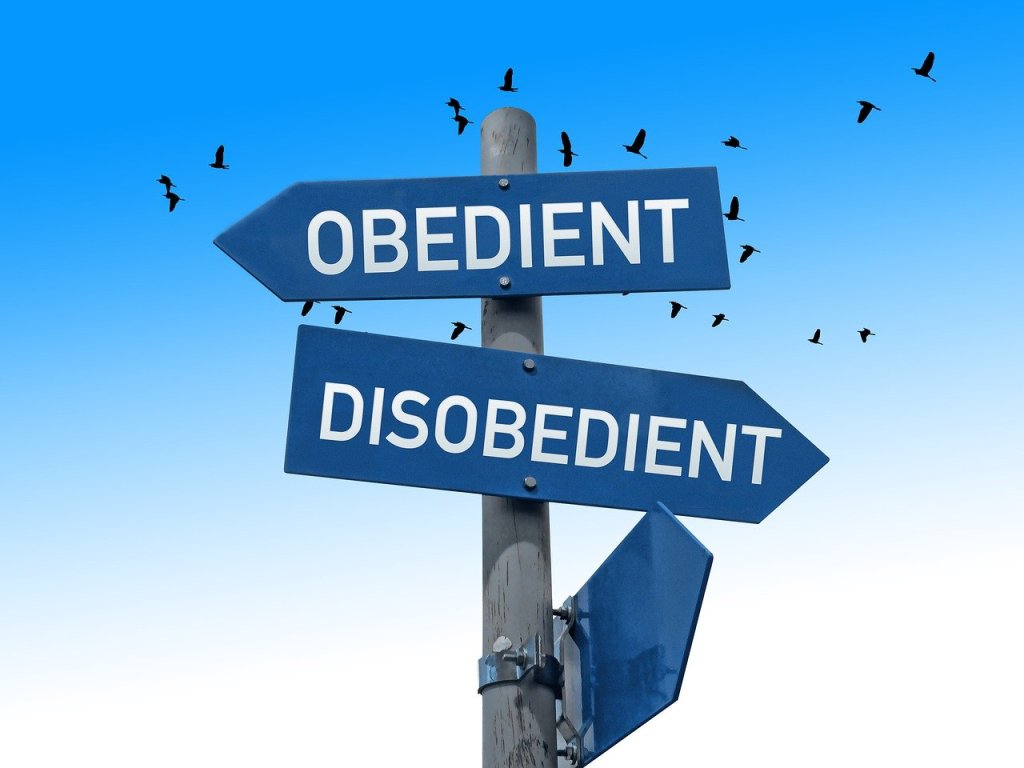
Jesus said, “Not everyone who says to Me, ‘Lord, Lord,’ shall enter the kingdom of heaven, but he who does the will of My Father in heaven.” (Matthew 7:21) The will of The Father is obedience to His Word. As Jesus also stated, “If you love Me, keep My commandments.” (John 14:15)
Here are three examples of those who submitted to His Word after realizing they were wrong. These can be found in the New Testament.
Peter’s Hypocrisy
When Cornelius was converted (see Acts 10), it was a signal that the Gentiles were now accepted under the new covenant. Peter went on to defend what he did before the council (see Acts 11). Although they were in agreement with the outcome (Acts 11:18), some of the Judaizers wanted the Gentiles to become proselytes Jews first.
This brings us to Acts 15 which have several of the apostles and others showed that the Gentiles didn’t have to become Jews first and were accepted all the same. Although this seem to clear up the matter, the problem, concerning circumcision, was ongoing. Even the apostle Peter, himself, got carried away in this matter.
Paul wrote about this in his letter to the church in Galatia, Now when Peter had come to Antioch, I withstood him to his face, because he was to be blamed; for before certain men came from James, he would eat with the Gentiles; but when they came, he withdrew and separated himself, fearing those who were of the circumcision. And the rest of the Jews also played the hypocrite with him, so that even Barnabas was carried away with their hypocrisy. But when I saw that they were not straightforward about the truth of the gospel, I said to Peter before them all, “If you, being a Jew, live in the manner of Gentiles and not as the Jews, why do you compel Gentiles to live as Jews?” (Galatians 2:11-14) Although we don’t know the outcome of the situation, we can safely say that Peter repented, and submitted to the truth, because he regarded Paul as a faithful brother in 2 Peter 3:15.
Paul’s Ignorance
In regard to Paul, himself, there was a time when he was wrong and when he was told as such, he repented and submitted himself to the scriptures. This is not about his former life as Saul of Tarsus but, rather, what took place many years later. On his second, of five, appearances before various leaders, when he was defending his apostleship, he addressed the Sanhedrin—
“Men and brethren, I have lived in all good conscience before God until this day.” And the high priest Ananias commanded those who stood by him to strike him on the mouth. Then Paul said to him, “God will strike you, you whitewashed wall! For you sit to judge me according to the law, and do you command me to be struck contrary to the law?” And those who stood by said, “Do you revile God’s high priest?” Then Paul said, “I did not know, brethren, that he was the high priest; for it is written, ‘You shall not speak evil of a ruler of your people.’” (Acts 23:1-5)
In Paul’s defense, given that he was away for long periods of time, preaching and teaching the gospel, he might have lost track of who was the high priest. But you will notice, that when Paul realized he was in error, he immediately apologized and submitted to God’s word; even referencing Exodus 22:28.
Apollos’ Lack of Instruction
On my previous website, I did an article called Unmentioned Baptisms. Part of it spoke about Apollos and his teaching of the gospel. When Aquila and Priscilla hear him speak, they realized that he hadn’t been fully instructed in the gospel as he only knew of the baptism of John (Acts 18:24-26).
Although it doesn’t say that he changed, we can conclude that he did (and was re-baptized) as he continued to preach the gospel, being exhorted by the brethren, and defended Jesus as The Christ (vs. 27-28).
Conclusion
We all must submit to God’s word as it is what will judge us on that final day. As Jesus stated, “He who rejects Me, and does not receive My words, has that which judges him—the word that I have spoken will judge him in the last day.” (John 12:48)
Don’t just read the bible, study it, submit to it, and share it with others. This is the only way one can become a true New Testament Christian. If you need assistance, do not hesitate to leave a comment.
 The Christian Caravan
Leave a comment