
Conversion in Acts, Part 3
Introduction
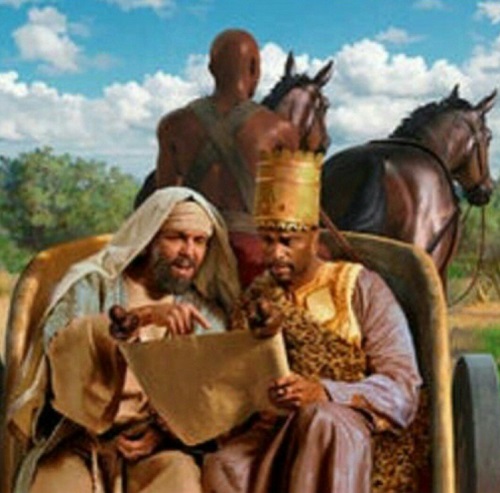
In our next conversion, the second half of Acts 8, we see Philip talking with a man who traveled hundreds of miles to worship in Jerusalem. He’s on his way home and, while he’s traveling, he’s reading aloud from scriptures. We can safely say that this man had a driver who handled the chariot.
Before you read this article, I suggest you read the account in Acts 8:26-40. I won’t be sharing the entire text, but I will point out several key factors in it.
Do You Understand What You’re Reading?
In verse 26, Now an angel of the Lord spoke to Philip, saying, “Arise and go toward the south along the road which goes down from Jerusalem to Gaza.” This is desert. (Acts 8:26) The interesting part about this verse and, the conversion in general, is that it refutes the doctrine of ‘Direct Operation of the Holy Spirit’. That doctrine states that a person is influenced by the Holy Spirit apart from the gospel.
If this doctrine was true, then the angel would have spoken to the eunuch directly and Philip wouldn’t have been a part of it at all. But here, in the scriptures, we see that the angel spoke to the preacher and told him where to go.
When Philip ran up to the eunuch, again directed by the angel, he could hear him reading from the prophet Isaiah. We’ll find out exactly where in scripture he was reading, but for those of us who have studied Isaiah, we know that it is filled with numerous prophecies about Jesus.
In verse 30, Philip asked him if he understood what he was reading. The eunuch replied that he unable without assistance. From here, we learn that it is more than simply believing that Jesus is the Son of God. You have to read, study, and fully understand what you are reading. The best way to do that is to have someone, more knowledgeable, to study with you.
Reading for yourself is fine, to a point, but if you don’t have help from someone else, you could come up with conclusions that are not found there at all.
In verses 32-33, we learn that the eunuch is reading the passage of scripture found in Isa. 53:7-8. The whole of chapter 53 is about the crucifixion of Christ which is the perfect place to talk to someone about Jesus and what He has done for us. Naturally, the divisions in to chapters and verses are manmade; coming decades later when the bible was fully put together, but it helps us to know where in the Old Testament he was reading and makes it easier for us to locate it.
Keep in mind, the New Testament hasn’t been written down yet, it was still being lived. Preachers, like Philip, had to rely on copies of the OT that were available for people to read and study. This is why it is so important to understand why there are so many prophecies about Jesus and events in the Old Testament. It also shows why it’s important to study the OT in general (Rom. 15:4).
He Preached Jesus to Him
In verses 34 and 35, we have the key passage to conversion of every true New Testament Christian, So the eunuch answered Philip and said, “I ask you, of whom does the prophet say this, of himself or of some other man?” Then Philip opened his mouth, and beginning at this Scripture, preached Jesus to him. (Acts 8:34-35) The prospect (the eunuch) asks a question, and the teacher (Philip) gives him a bible answer. He doesn’t tell him to accept Jesus into his heart, he doesn’t tell him that all you have to do is believe.
No! Instead, he preaches that Jesus Christ is the Son of the Living God, that He died on the cross for the sins of all mankind, and that those who believe, repent, confess His name, and are baptized, will be saved. This is the message Philip himself heard, the same message that Simon the Sorcerer and the Samaritans heard, and the same message that the apostles preached on Pentecost when the church first began.
What Hinders Me?
We don’t know how much time passed before the eunuch asked his question, but we can conclude that Philip explained baptism to him. Here are those verses, Now as they went down the road, they came to some water. And the eunuch said, “See, here is water. What hinders me from being baptized?” Then Philip said, “If you believe with all your heart, you may.” And he answered and said, “I believe that Jesus Christ is the Son of God.” (Acts 8:36-37) He understood that baptism was essential, not only that but, also there had to be a certain amount of water for him to be immersed in. Why? Because if he only had to be sprinkled or have it poured on him, he would have used a jug of water that was in the chariot with him. Since he was traveling a long distance; both himself and his driver, they would have brought enough water for them to drink.
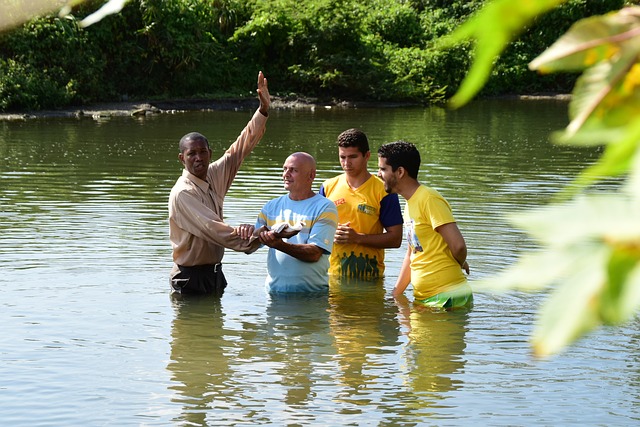
You will also notice that if ‘belief only’ was enough, Philip would have said so. Instead, the eunuch commands the chariot to stop (vs. 38a). And, as I said before, if sprinkling or pouring was enough, they wouldn’t need to stop the chariot either. Let’s look at the entire verse, So he commanded the chariot to stand still. And both Philip and the eunuch went down into the water, and he baptized him. (Acts 8:38 NKJV) Here, again, both went down into the water. There had to be enough for the eunuch to be immersed. Any other mode of baptism is wrong and unscriptural.
He went on his way…
In verse 39 we read, Now when they came up out of the water, the Spirit of the Lord caught Philip away, so that the eunuch saw him no more; and he went on his way rejoicing (Acts 8:39). Philip’s departure was, most likely, miraculous as he was no longer needed at this point. Verse 40 explains where Philip ended up.
At the end of verse 39 we see, the aftermath of the eunuch’s conversion, …the eunuch saw him no more; and he went on his way rejoicing. The significance, again, is that when one’s sins are washed away, it should be the happiest moment in your life. Just like the Samaritans, earlier in chapter 8, and those on Pentecost back in Acts 2. Again, this is building a foundation toward the discussion of the next conversion which is Saul of Tarsus.
Conclusion
Once again, we are encouraged that New Testament Christians are made by the hearing of the gospel. As the apostle Paul wrote, So then faith comes by hearing, and hearing by the word of God. (Romans 10:17) And again, For I am not ashamed of the gospel of Christ, for it is the power of God to salvation for everyone who believes, for the Jew first and also for the Greek. (Romans 1:16)
Accept no substitute for what the bible says in regard to salvation. There is no other way to become a Christian other than by what you read in the scriptures.

 The Christian Caravan
Leave a comment